- 1. Cloud Native คืออะไร
- 2. Kubernetes อยู่ตรงไหนใน Cloud Native
- 3. OpenShift คืออะไร
- 4. ความสัมพันธ์ระหว่าง Cloud Native, Kubernetes และ OpenShift
- 5. OpenShift Architecture แบบเข้าใจง่าย
- 6. Kubernetes กับ OpenShift ต่างกันอย่างไร
- 7. ตัวอย่าง Cloud Native Stack บน OpenShift
- 8. OpenShift กับ GitOps
- 9. OpenShift Operators
- 10. OpenShift สำหรับ Microservices
- 11. OpenShift กับ DevSecOps
- 12. OpenShift กับ Hybrid Cloud
- 13. ตัวอย่าง Developer Workflow
- 14. OpenShift CLI
- 15. OpenShift เหมาะกับใคร
- 16. ตัวอย่าง Use Cases
- 17. Cloud Native Maturity Roadmap
- 18. Workshop Roadmap
- 19. สรุป
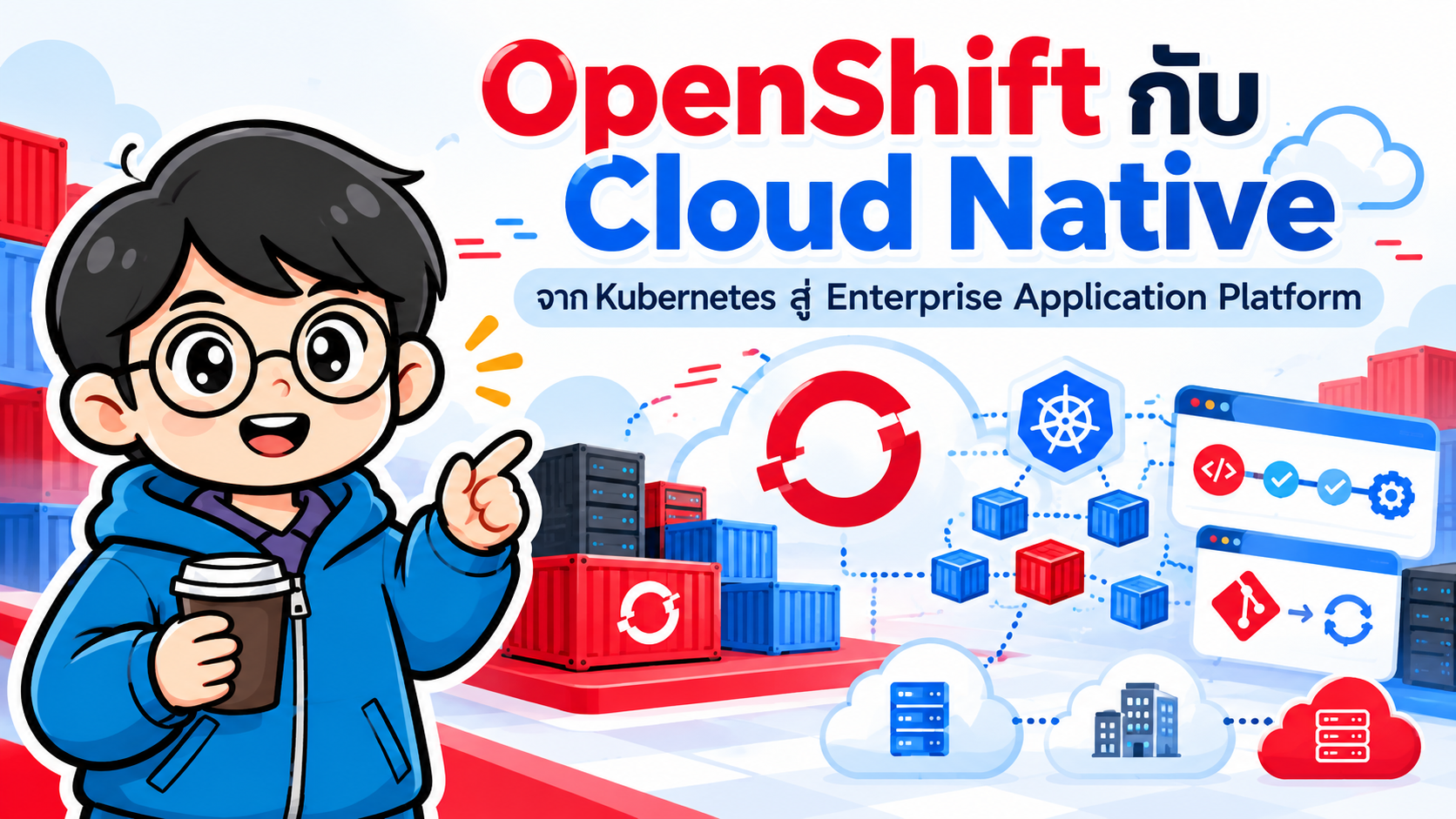
เมื่อพูดถึงการพัฒนาและดูแลระบบสมัยใหม่ เรามักพบคำว่า Cloud Native, Kubernetes และ OpenShift อยู่ด้วยกันเสมอ แต่ทั้งสามคำไม่ได้มีความหมายเหมือนกัน
- Cloud Native คือแนวคิดและรูปแบบการออกแบบ พัฒนา และดำเนินงานระบบให้เหมาะกับสภาพแวดล้อมแบบ Cloud
- Kubernetes คือระบบ Container Orchestration สำหรับจัดการแอปพลิเคชันที่ทำงานใน Container
- Red Hat OpenShift คือ Application Platform ที่มี Kubernetes เป็นแกนกลาง และเพิ่มเครื่องมือสำหรับ Developer, DevOps, Security และ Operations ให้พร้อมใช้งานในระดับองค์กร
กล่าวอย่างง่ายได้ว่า
Cloud Native คือแนวคิด → Kubernetes คือ Engine สำคัญ → OpenShift คือ Platform ที่นำ Kubernetes และเครื่องมือรอบข้างมาประกอบเป็นระบบพร้อมใช้งาน
#1. Cloud Native คืออะไร
Cloud Native ไม่ได้หมายถึงเพียงแค่นำ Application ไปติดตั้งบน AWS, Azure หรือ Google Cloud เท่านั้น แต่หมายถึงการออกแบบระบบให้สามารถใช้ประโยชน์จาก Infrastructure ที่มีความยืดหยุ่นและเปลี่ยนแปลงได้ตลอดเวลา
แนวคิดที่พบได้บ่อย ได้แก่
- Containers
- Microservices
- Declarative Configuration
- Infrastructure as Code
- Immutable Infrastructure
- Automated Deployment
- CI/CD
- GitOps
- Observability
- Auto Scaling
- Self-Healing
- Service Mesh
- DevSecOps
Cloud Native Application จึงควรถูกออกแบบให้สามารถ
- Scale ได้
- Recover จากความล้มเหลวได้
- Deploy ได้บ่อย
- Automation ได้
- Observability ได้
- ทำงานได้บน Infrastructure หลายรูปแบบ
#2. Kubernetes อยู่ตรงไหนใน Cloud Native
Kubernetes หรือ K8s เป็น Open Source Container Orchestration Platform ที่ช่วยจัดการ Containerized Application
หน้าที่สำคัญ เช่น
- Deploy Application
- Scheduling Container
- Scaling
- Service Discovery
- Load Balancing
- Self-Healing
- Rolling Update
- Configuration Management
- Secret Management
- Persistent Storage Integration
ตัวอย่าง Kubernetes Deployment
apiVersion: apps/v1
kind: Deployment
metadata:
  name: demo-api
spec:
  replicas: 3
  selector:
    matchLabels:
      app: demo-api
  template:
    metadata:
      labels:
        app: demo-api
    spec:
      containers:
        - name: api
          image: ghcr.io/example/demo-api:1.0
          ports:
            - containerPort: 8080
Deployment นี้ประกาศว่า Application ต้องมีจำนวน 3 replicas และ Kubernetes จะพยายามรักษา Desired State ดังกล่าวไว้
#3. OpenShift คืออะไร
Red Hat OpenShift เป็น Enterprise Application Platform ที่ใช้ Kubernetes เป็นแกนกลาง
OpenShift ไม่ได้แทน Kubernetes แต่เพิ่ม Platform Services และ Operational Tooling เข้าไปเพื่อให้ใช้งาน Kubernetes ในองค์กรได้ง่ายขึ้น
ภาพแนวคิดโดยย่อ
Application
    ↓
Developer Platform
    ↓
OpenShift
    ↓
Kubernetes
    ↓
Containers
    ↓
Linux / Cloud / Datacenter
OpenShift ช่วยรวมความสามารถหลายด้านไว้ใน Platform เดียว เช่น
- Kubernetes
- Container Runtime
- Networking
- Ingress / Routing
- Authentication / Authorization
- Operators
- Monitoring
- Logging Integration
- CI/CD Integration
- GitOps
- Developer Console
- Security Policies
- Registry Integration
- Service Mesh Integration
- Serverless Integration
#4. ความสัมพันธ์ระหว่าง Cloud Native, Kubernetes และ OpenShift
สามารถมองได้เป็นลำดับดังนี้
flowchart TD

A[Cloud Native Principles]

A --> B[Containers]
A --> C[Microservices]
A --> D[DevOps / DevSecOps]
A --> E[Automation]
A --> F[Observability]

B --> G[Kubernetes]
C --> G
E --> G

G --> H[Red Hat OpenShift]

H --> I[Developer Platform]
H --> J[GitOps]
H --> K[Operators]
H --> L[Security]
H --> M[Monitoring]
H --> N[Hybrid Cloud]
Cloud Native จึงเป็นแนวคิดที่กว้างกว่า OpenShift และ Kubernetes
#5. OpenShift Architecture แบบเข้าใจง่าย
โครงสร้างสามารถแบ่งเป็นหลายชั้น
┌────────────────────────────────────┐
│          Applications              │
│ Java | Go | Python | Node | .NET   │
├────────────────────────────────────┤
│        Developer Experience        │
│ Console | CLI | Pipelines | GitOps │
├────────────────────────────────────┤
│            OpenShift               │
│ Operators | Routes | Security      │
│ Monitoring | Registry | Policies   │
├────────────────────────────────────┤
│            Kubernetes              │
│ Pod | Deployment | Service | PVC   │
├────────────────────────────────────┤
│           Infrastructure           │
│ AWS | Azure | GCP | VMware | Bare  │
└────────────────────────────────────┘
#6. Kubernetes กับ OpenShift ต่างกันอย่างไร
| ประเด็น | Kubernetes | OpenShift |
|---|---|---|
| ประเภท | Container Orchestration Platform | Enterprise Application Platform |
| Kubernetes API | มี | มี |
| Web Console | ขึ้นกับ Distribution / Tool | มี OpenShift Console |
| Developer Workflow | ต้องประกอบเครื่องมือเพิ่ม | มี Platform Integration มากกว่า |
| Security Defaults | กำหนดได้ยืดหยุ่น | มีแนวทางและ Defaults สำหรับองค์กร |
| Operators | รองรับ | ผสานเข้ากับ Platform อย่างมาก |
| Monitoring | ต้องเลือก Stack | มีระบบ Monitoring ที่ integrate กับ Platform |
| GitOps | ติดตั้งเพิ่มเติม | รองรับผ่าน OpenShift GitOps |
| Enterprise Support | แล้วแต่ Vendor | Red Hat Support |
| Hybrid Cloud | ทำได้ | เป็น Use Case สำคัญของ Platform |
ดังนั้น OpenShift เหมาะกับองค์กรที่ต้องการ Kubernetes + Enterprise Platform + Governance + Support
#7. ตัวอย่าง Cloud Native Stack บน OpenShift
ตัวอย่าง Stack
Developer
   │
   ▼
Git Repository
   │
   ▼
CI Pipeline
   │
   ▼
Container Image
   │
   ▼
Container Registry
   │
   ▼
GitOps Repository
   │
   ▼
Argo CD / OpenShift GitOps
   │
   ▼
OpenShift
   │
   ├── Kubernetes
   ├── Operators
   ├── Monitoring
   ├── Security
   └── Networking
Workflow นี้ช่วยให้การ Deploy ระบบเป็นแบบ Declarative และตรวจสอบย้อนหลังผ่าน Git ได้
#8. OpenShift กับ GitOps
GitOps ใช้ Git เป็น Source of Truth ของระบบ
ตัวอย่าง Repository
gitops-repository/
├── applications/
│   ├── frontend/
│   └── backend/
├── environments/
│   ├── development/
│   ├── staging/
│   └── production/
└── argocd/
เมื่อมีการเปลี่ยน Manifest
Developer
   ↓
Git Push
   ↓
Git Repository
   ↓
Argo CD
   ↓
OpenShift Cluster
Argo CD จะตรวจสอบความแตกต่างระหว่าง Desired State ใน Git กับ Actual State ของ Cluster และ Sync ให้ตรงกันตาม Policy ที่กำหนด
#9. OpenShift Operators
แนวคิดสำคัญอีกอย่างคือ Operator
Operator เป็นวิธีเพิ่มความรู้ด้านการดูแล Application เข้าไปใน Kubernetes Controller
ตัวอย่างเช่น
PostgreSQL Operator
Kafka Operator
Prometheus Operator
OpenShift GitOps Operator
Service Mesh Operator
แทนที่จะติดตั้ง Software ด้วย Script จำนวนมาก ผู้ดูแลสามารถประกาศ Desired State ผ่าน Custom Resource
apiVersion: example.io/v1
kind: Database
metadata:
  name: production-db
spec:
  replicas: 3
  storage: 100Gi
Operator จะรับผิดชอบ Lifecycle ของระบบตาม Logic ที่ถูกเขียนไว้
#10. OpenShift สำหรับ Microservices
Architecture ตัวอย่าง
flowchart LR

U[User]

U --> R[OpenShift Route]

R --> F[Frontend]

F --> A[API Gateway]

A --> S1[User Service]
A --> S2[Order Service]
A --> S3[Payment Service]

S1 --> DB1[(Database)]
S2 --> DB2[(Database)]

S3 --> MQ[Message Broker]

MQ --> S4[Notification Service]
แต่ละ Service สามารถ
- Deploy แยกกัน
- Scale แยกกัน
- Update แยกกัน
- Monitor แยกกัน
- กำหนด Resource Limit แยกกัน
ได้ตามแนวทาง Microservices
#11. OpenShift กับ DevSecOps
Cloud Native Platform ที่ใช้งานในองค์กรไม่ได้สนใจเฉพาะ Deployment แต่ต้องคำนึงถึง Security ตั้งแต่ต้น
ตัวอย่าง Pipeline
Source Code
   ↓
Unit Test
   ↓
SAST
   ↓
Dependency Scan
   ↓
Build Image
   ↓
Container Scan
   ↓
Push Registry
   ↓
Deploy
   ↓
Runtime Monitoring
จึงสามารถผสานแนวคิด DevSecOps เข้าไปใน Software Delivery Lifecycle ได้
#12. OpenShift กับ Hybrid Cloud
จุดเด่นของ OpenShift คือการออกแบบให้ Application Platform มีรูปแบบการทำงานสอดคล้องกันในหลาย Infrastructure
ตัวอย่าง
                 OpenShift Platform

 ┌────────────┬────────────┬────────────┐
 │ On-Premise │ Public     │ Edge       │
 │ Datacenter │ Cloud      │            │
 └────────────┴────────────┴────────────┘

      AWS | Azure | GCP | VMware | Bare Metal
องค์กรจึงสามารถวาง Workload ตามข้อกำหนดด้าน
- Cost
- Security
- Compliance
- Performance
- Data Residency
- Availability
ได้
#13. ตัวอย่าง Developer Workflow
Developer สร้าง Application เช่น
Node.js API
สร้าง Containerfile
FROM registry.access.redhat.com/ubi9/nodejs-20

WORKDIR /opt/app-root/src

COPY package*.json ./

RUN npm ci

COPY . .

CMD ["npm", "start"]
จากนั้น Build Image
podman build -t demo-api:1.0 .
Login OpenShift
oc login https://api.example.com:6443
สร้าง Project
oc new-project demo
Deploy Application
oc new-app demo-api:1.0
ตรวจสอบ Pod
oc get pods
ดู Service
oc get svc
Expose Application
oc expose service demo-api
ดู Route
oc get route
Workflow พื้นฐานจึงคล้าย Kubernetes แต่ OpenShift เพิ่ม abstraction และ tooling เพื่อช่วย Developer
#14. OpenShift CLI
คำสั่ง oc เป็น CLI หลักของ OpenShift
ตัวอย่างคำสั่ง
oc login
oc project
oc get pods
oc get deployments
oc get services
oc get routes
oc logs
oc describe
oc apply
oc delete
หลายคำสั่งมีรูปแบบเดียวกับ kubectl
เช่น
kubectl get pods
และ
oc get pods
#15. OpenShift เหมาะกับใคร
OpenShift เหมาะกับองค์กรที่มีความต้องการ เช่น
- ใช้ Kubernetes ระดับ Enterprise
- มีหลาย Development Teams
- ต้องการ Standard Platform
- ต้องการ Governance
- ต้องการ DevSecOps
- ต้องการ Hybrid Cloud
- ต้องการ GitOps
- ต้องการ Self-Service Developer Platform
- มีระบบ Microservices จำนวนมาก
- ต้องการ Enterprise Support
#16. ตัวอย่าง Use Cases
#Modernize Legacy Application
Monolith
   ↓
Containerize
   ↓
Deploy OpenShift
   ↓
Extract Services
   ↓
Microservices
#Microservices Platform
Microservices
     ↓
Containers
     ↓
OpenShift
#DevOps Platform
Git
 ↓
CI/CD
 ↓
Container Registry
 ↓
OpenShift
#GitOps Platform
Git
 ↓
Argo CD
 ↓
OpenShift
#AI / ML Platform
Model
 ↓
Inference Container
 ↓
OpenShift
 ↓
GPU / CPU Infrastructure
#17. Cloud Native Maturity Roadmap
แนวทางเรียนรู้สามารถแบ่งได้เป็นลำดับ
Linux
 ↓
Git
 ↓
Containers
 ↓
Docker / Podman
 ↓
Kubernetes
 ↓
OpenShift
 ↓
CI/CD
 ↓
GitOps
 ↓
Observability
 ↓
DevSecOps
 ↓
Platform Engineering
สำหรับผู้เริ่มต้น ไม่ควรเริ่มจาก OpenShift โดยไม่เข้าใจ Kubernetes เพราะ Resource และแนวคิดสำคัญจำนวนมากของ OpenShift มีพื้นฐานมาจาก Kubernetes
#18. Workshop Roadmap
สามารถแบ่ง Workshop เป็น 8 ขั้นตอน
#Workshop 1 — Container
สร้าง Application และ Container Image
podman build -t demo-app .
#Workshop 2 — Kubernetes Fundamentals
เรียนรู้
Pod
Deployment
Service
ConfigMap
Secret
PVC
Ingress
#Workshop 3 — OpenShift Fundamentals
เรียนรู้
Project
Route
Build
ImageStream
Security
Operator
#Workshop 4 — Deploy Application
oc new-project workshop

oc apply -f deployment.yaml
oc apply -f service.yaml
oc expose service demo-app
#Workshop 5 — CI/CD
GitHub
 ↓
Pipeline
 ↓
Build
 ↓
Image
 ↓
OpenShift
#Workshop 6 — GitOps
Git
 ↓
Argo CD
 ↓
OpenShift
#Workshop 7 — Observability
ศึกษา
Metrics
Logs
Traces
Alerts
Dashboards
#Workshop 8 — DevSecOps
เพิ่ม
SAST
Dependency Scan
Container Scan
Policy
Runtime Security
#19. สรุป
ความสัมพันธ์สามารถสรุปได้ดังนี้
Cloud Native
     │
     ├── Containers
     ├── Microservices
     ├── DevOps
     ├── Automation
     ├── Observability
     └── Declarative Infrastructure
              │
              ▼
         Kubernetes
              │
              ▼
          OpenShift
              │
     ┌────────┼────────┐
     │        │        │
   GitOps  Security  Developer
                    Platform
Cloud Native คือแนวคิดและรูปแบบการสร้างระบบสมัยใหม่
Kubernetes เป็นหนึ่งในเทคโนโลยีหลักของ Cloud Native สำหรับจัดการ Container
OpenShift นำ Kubernetes มาเป็นแกนกลางและต่อยอดเป็น Application Platform ที่รวมเครื่องมือด้าน Development, Operations, Security, GitOps และ Hybrid Cloud
ดังนั้น หากต้องการวางเส้นทางการเรียนรู้ให้เป็นระบบ สามารถใช้ลำดับ
Container
   ↓
Kubernetes
   ↓
OpenShift
   ↓
CI/CD
   ↓
GitOps
   ↓
Observability
   ↓
DevSecOps
   ↓
Platform Engineering
แนวทางนี้จะช่วยให้เข้าใจว่า OpenShift ไม่ใช่เพียง “Kubernetes อีกตัวหนึ่ง” แต่เป็น Platform สำหรับนำแนวคิด Cloud Native Software Delivery ไปใช้งานในระดับองค์กร
#References
- Red Hat OpenShift: https://www.redhat.com/en/technologies/cloud-computing/openshift
- Red Hat Cloud-native application development with OpenShift: https://www.redhat.com/en/technologies/cloud-computing/openshift/cloud-native
- Red Hat OpenShift Container Platform: https://www.redhat.com/en/technologies/cloud-computing/openshift/container-platform
- Kubernetes Documentation: https://kubernetes.io/docs/
- CNCF Cloud Native Glossary: https://glossary.cncf.io/
- Cloud Native Computing Foundation: https://www.cncf.io/