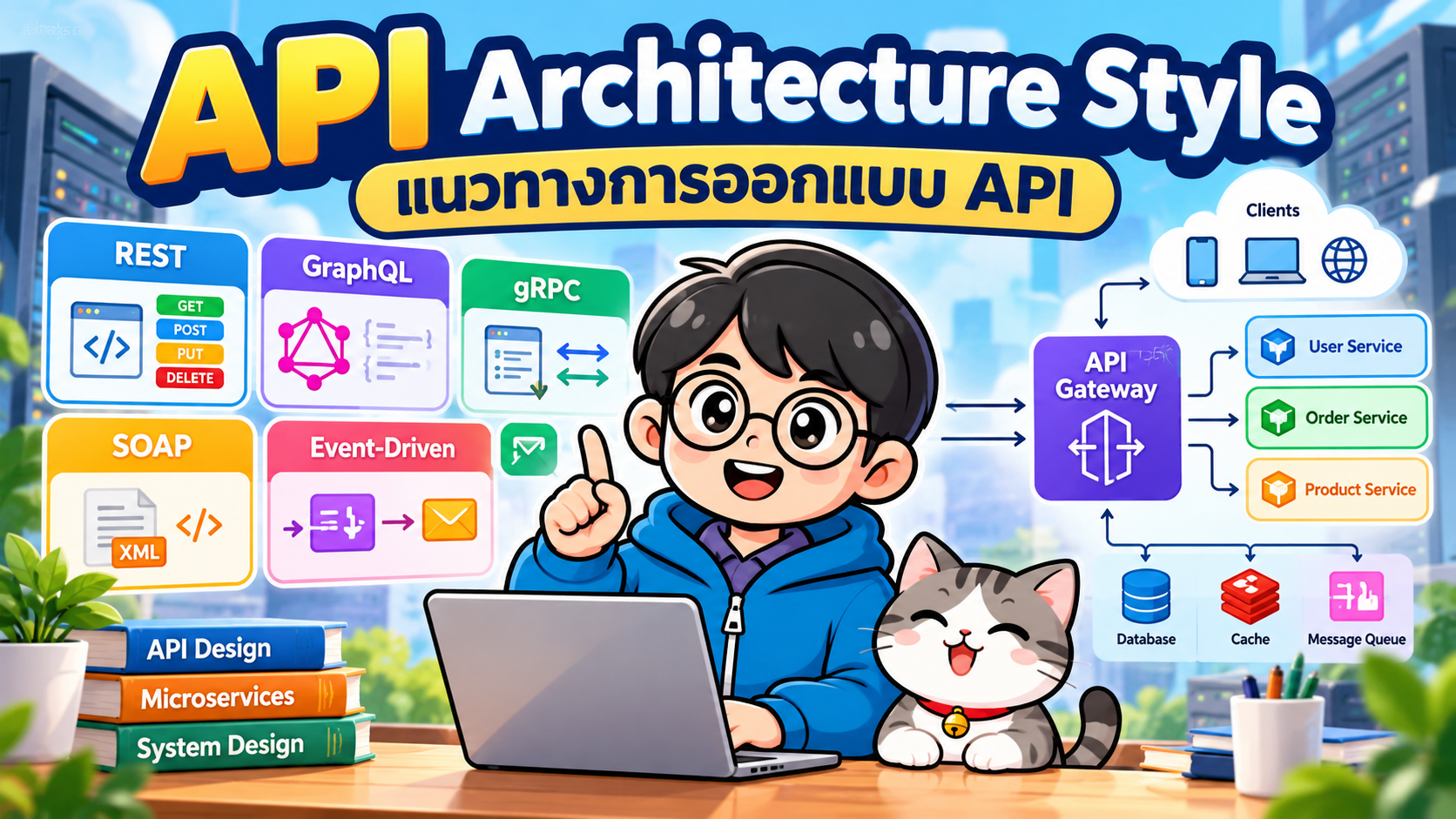
- API Architecture Style คืออะไร
- 1. REST (Representational State Transfer)
- 2. GraphQL
- 3. gRPC (Remote Procedure Call)
- 4. SOAP (Simple Object Access Protocol)
- 5. WebSocket
- 6. Event-Driven APIs และ Webhooks
- 7. เปรียบเทียบแนวทาง
- 8. แนวทางเลือกใช้
- 9. Workshop: REST API อย่างง่ายด้วย Express.js
- 10. สรุป
- แหล่งศึกษาเพิ่มเติม
#API Architecture Style คืออะไร
API Architecture Style คือรูปแบบการกำหนดวิธีที่ระบบสื่อสารกันผ่าน API ครอบคลุมโครงสร้างทรัพยากร รูปแบบข้อความ โปรโตคอล การจัดการสถานะ และรูปแบบการโต้ตอบระหว่างผู้ให้บริการและผู้เรียกใช้งาน การเลือกสไตล์ส่งผลต่อประสิทธิภาพ ความยืดหยุ่น การบำรุงรักษา และความสามารถในการขยายระบบ
หมายเหตุ: REST เป็น architectural style; GraphQL เป็น query language และ runtime สำหรับ API; gRPC เป็น RPC framework; SOAP เป็น messaging protocol; WebSocket เป็น communication protocol และ event-driven เป็น interaction pattern จึงไม่ใช่สิ่งที่อยู่ในหมวดอนุกรมวิธานเดียวกันทั้งหมด แต่สามารถเปรียบเทียบเป็นแนวทางการออกแบบ API ในทางปฏิบัติได้
#1. REST (Representational State Transfer)
REST ใช้ resource เป็นศูนย์กลาง ระบุผ่าน URI และใช้ HTTP methods เช่น GET, POST, PUT, PATCH และ DELETE โดยทั่วไปสื่อสารด้วย JSON
GET /api/products/42 HTTP/1.1
Accept: application/json
{"id":42,"name":"Keyboard","price":1290}
จุดเด่น: เข้าใจง่าย ใช้ HTTP ecosystem ได้ดี รองรับ caching และเหมาะกับ CRUD API
ข้อควรระวัง: บางกรณีต้องเรียกหลาย endpoint หรือรับข้อมูลเกินความจำเป็น ควรออกแบบ pagination, filtering, versioning และ error responses ให้ชัดเจน
#2. GraphQL
GraphQL ให้ client ระบุฟิลด์ที่ต้องการได้ใน query เดียว และมี schema แบบ strongly typed
query {
  product(id: "42") {
    name
    price
  }
}
จุดเด่น: ลด over-fetching สำหรับหน้าจอที่ต้องใช้ข้อมูลเฉพาะชุด รวมข้อมูลจากหลายแหล่งผ่าน schema เดียว
ข้อควรระวัง: ต้องจัดการ query complexity, N+1 queries, authorization รายฟิลด์ และ caching ให้เหมาะสม
#3. gRPC (Remote Procedure Call)
gRPC นิยมใช้ Protocol Buffers นิยาม service และ message และมักใช้ HTTP/2 เป็น transport
syntax = "proto3";

service ProductService {
  rpc GetProduct (ProductRequest) returns (ProductReply);
}

message ProductRequest { int64 id = 1; }
message ProductReply {
  int64 id = 1;
  string name = 2;
  double price = 3;
}
จุดเด่น: สัญญา API ชัดเจน รองรับ code generation และ streaming เหมาะกับ service-to-service communication
ข้อควรระวัง: การเรียกโดยตรงจากเว็บเบราว์เซอร์มักต้องใช้ gRPC-Web หรือ gateway และต้องดูแลความเข้ากันได้ของ schema
#4. SOAP (Simple Object Access Protocol)
SOAP เป็น protocol สำหรับแลกเปลี่ยนข้อความ XML และมักใช้ WSDL นิยามสัญญาบริการ เหมาะกับระบบองค์กรที่ต้องการมาตรฐาน WS-* บางประเภท
<soap:Envelope xmlns:soap="http://schemas.xmlsoap.org/soap/envelope/">
  <soap:Body>
    <GetProduct xmlns="urn:example:products">
      <id>42</id>
    </GetProduct>
  </soap:Body>
</soap:Envelope>
จุดเด่น: สัญญาการสื่อสารและมาตรฐาน enterprise ที่มีอยู่แล้ว
ข้อควรระวัง: ข้อความ XML และชุดมาตรฐานอาจเพิ่มความซับซ้อน
#5. WebSocket
WebSocket ให้ client และ server ส่งข้อความสองทางผ่าน connection ที่คงอยู่ เหมาะกับ chat, live dashboard และ collaborative editing
const socket = new WebSocket('wss://example.com/live');
socket.addEventListener('message', event => {
  console.log(JSON.parse(event.data));
});
จุดเด่น: ส่งข้อมูลแบบ real-time สองทางได้โดยไม่ต้อง polling ตลอดเวลา
ข้อควรระวัง: ต้องจัดการ reconnect, heartbeat, authentication, backpressure และการ scale connections
#6. Event-Driven APIs และ Webhooks
Event-driven communication ให้ผู้ผลิตเหตุการณ์ส่ง event ไปยัง broker หรือ subscriber ส่วน webhook เป็น HTTP callback ที่ส่งเมื่อเกิดเหตุการณ์
{
  "event_id": "evt_001",
  "type": "order.created",
  "occurred_at": "2026-10-13T14:00:00Z",
  "data": {"order_id": 101}
}
จุดเด่น: ลด coupling เชิงเวลา รองรับงาน asynchronous และการกระจายเหตุการณ์ไปหลายระบบ
ข้อควรระวัง: ต้องออกแบบ idempotency, retries, ordering, dead-letter queue, event versioning และ observability; สำหรับ webhook ควรตรวจสอบลายเซ็นและป้องกัน replay
#7. เปรียบเทียบแนวทาง
| แนวทาง | รูปแบบหลัก | เหมาะกับ | ประเด็นที่ต้องดูแล |
|---|---|---|---|
| REST | Resource + HTTP | Public API, CRUD, mobile backend | Endpoint design, pagination |
| GraphQL | Client-defined queries | UI ที่ต้องเลือกข้อมูลละเอียด | Query cost, N+1, authorization |
| gRPC | Typed RPC | Internal microservices | Browser support, schema evolution |
| SOAP | XML messaging | Legacy/enterprise integration | Complexity, WS-* configuration |
| WebSocket | Bidirectional persistent connection | Chat, real-time dashboard | Connection lifecycle, scaling |
| Event-driven / Webhook | Async event notifications | Orders, payment notifications, integration | Delivery guarantees, retries, idempotency |
#8. แนวทางเลือกใช้
- Public CRUD API: เริ่มจาก REST หากไม่มีข้อกำหนดพิเศษ
- Frontend ที่ต้องรวมข้อมูลหลายแหล่ง: พิจารณา GraphQL
- Internal service-to-service ที่เน้น contract และ streaming: พิจารณา gRPC
- เชื่อมต่อระบบองค์กรเดิมที่ใช้ WS-*: ใช้ SOAP ตามสัญญาที่ระบบกำหนด
- ต้องส่งข้อมูลสองทางทันที: ใช้ WebSocket
- ระบบที่ตอบสนองต่อเหตุการณ์และไม่ต้องรอผลทันที: ใช้ event-driven messaging หรือ webhook
ระบบจริงสามารถผสมหลายแนวทางได้ เช่น REST สำหรับ public API, gRPC สำหรับ internal services, WebSocket สำหรับ live updates และ message broker สำหรับ event processing
#9. Workshop: REST API อย่างง่ายด้วย Express.js
เตรียม Node.js แล้วสร้างโปรเจกต์:
mkdir api-style-workshop && cd api-style-workshop
npm init -y
npm install express
สร้าง server.js:
const express = require('express');
const app = express();
app.use(express.json());

const products = [{ id: 1, name: 'Keyboard', price: 1290 }];

app.get('/api/products', (req, res) => res.json(products));
app.get('/api/products/:id', (req, res) => {
  const product = products.find(p => p.id === Number(req.params.id));
  if (!product) return res.status(404).json({ error: 'Product not found' });
  res.json(product);
});
app.post('/api/products', (req, res) => {
  const { name, price } = req.body;
  if (typeof name !== 'string' || !name.trim() || typeof price !== 'number' || !Number.isFinite(price) || price < 0) {
    return res.status(400).json({ error: 'Invalid product data' });
  }
  const product = { id: Math.max(0, ...products.map(p => p.id)) + 1, name: name.trim(), price };
  products.push(product);
  res.status(201).location(`/api/products/${product.id}`).json(product);
});

app.listen(3000, () => console.log('API running on port 3000'));
ทดลอง:
node server.js
curl http://localhost:3000/api/products
curl -X POST http://localhost:3000/api/products \
  -H 'Content-Type: application/json' \
  -d '{"name":"Mouse","price":590}'
ตัวอย่างนี้เก็บข้อมูลในหน่วยความจำเพื่อการเรียนรู้ ยังไม่ใช่ production-ready API; ระบบจริงควรเพิ่มฐานข้อมูล การพิสูจน์ตัวตน การกำหนดสิทธิ์ rate limiting การทดสอบ และ monitoring
#10. สรุป
ไม่มี API style ใดดีที่สุดในทุกสถานการณ์ ควรเลือกจากลักษณะการโต้ตอบ (request/response, streaming หรือ asynchronous), ประเภท client, latency, data contract, security และความพร้อมของทีม โดยสามารถออกแบบแบบ hybrid เพื่อใช้ข้อดีของแต่ละแนวทางร่วมกันได้
#แหล่งศึกษาเพิ่มเติม
- REST: Roy Fielding, Architectural Styles and the Design of Network-based Software Architectures (2000)
- GraphQL: https://graphql.org/learn/
- gRPC: https://grpc.io/docs/
- SOAP: https://www.w3.org/TR/soap12-part1/
- WebSocket: https://developer.mozilla.org/en-US/docs/Web/API/WebSockets_API
- AsyncAPI: https://www.asyncapi.com/docs